The Algorithm of Style: AI & Machine Learning Engineer Wear in 2026
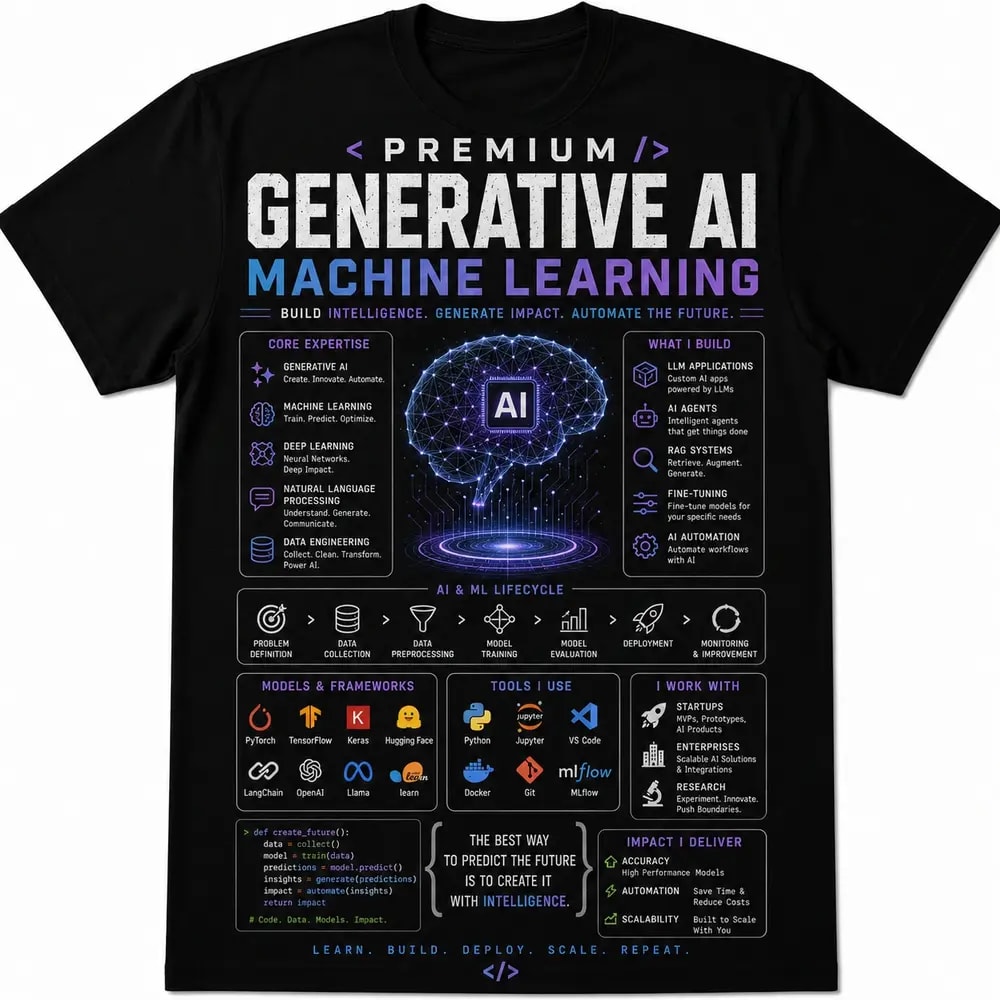
The technological landscape has been permanently rewritten. Today, the individuals writing the code that powers generative models, neural networks, and autonomous agents are the undisputed architects of our digital future.
As global AI spending reaches historic heights, the competition for top-tier talent is fiercer than ever. With this shift in corporate power comes a massive cultural and style upgrade. Enter AI & Machine Learning Engineer Wear—a premium, highly functional fashion niche dedicated entirely to data scientists, MLOps specialists, and AI researchers.
This isn't about cheap promotional t-shirts with ugly logos. It is a booming apparel segment focusing on premium materials, insider intellectualism, and ergonomic superiority. Let’s explore the anatomy of the AI elite's wardrobe and how to capture this lucrative e-commerce market.
1. The "Neural Minimalist" Aesthetic
Historically, the stereotypical software developer was depicted in oversized, unkempt clothing. Today, a Lead ML Engineer commands massive corporate influence and a venture-capitalist-level salary. Their wardrobe reflects this elevated status, blending Silicon Valley minimalism with high-end luxury streetwear.
The dominant style in AI labs is "Neural Minimalism." This aesthetic relies heavily on monochromatic color palettes—mostly blacks, deep grays, and midnight blues. The focus is entirely on the silhouette, the quality of the fabric, and the structure of the garment rather than loud, flashy branding.
The Psychological Driver: When your daily cognitive load involves fine-tuning billions of parameters for a Large Language Model (LLM), you suffer from severe decision fatigue. A capsule wardrobe of high-quality, interchangeable minimalist clothing eliminates the need to think about what to wear in the morning. Premium 400 GSM heavyweight cotton hoodies, unbranded tailored joggers, and sleek bomber jackets are the core staples. The goal is to look sharp enough for a stakeholder pitch meeting, yet comfortable enough for an 18-hour coding sprint.
2. Intellectual Typography and Insider Humor
When the AI elite do wear graphic apparel, it acts as a strict intellectual filter. The graphics feature hyper-specific inside jokes that only other data professionals understand. If you do not know the difference between a transformer block and gradient descent, you simply won't get the joke.
Code as Art
-
Statistical Humor: Shirts featuring complex mathematical formulas, Gaussian distributions, or witty jokes about "P-values" and "Overfitting."
-
Framework Pride: Subtle nods to the tools of the trade. A minimalist shirt featuring just the words
import torch(for PyTorch) or references to CUDA cores is instantly recognizable to anyone working on Machine Learning platforms. -
The "Black Box" Irony: Apparel that pokes fun at the unpredictable, sometimes hallucinatory nature of AI. Slogans like "I Don't Know How It Works Either," "Blame the Algorithm," or "Awaiting GPU Allocation" are massive bestsellers.
3. High-Performance Fabrics for Deep Work
The physical demands of an AI engineer might seem low to an outside observer, but sitting motionless in front of multiple monitors while processing terabytes of data requires highly specific ergonomic support. Furthermore, because training massive AI models requires vast computational power that generates extreme heat, enterprise data centers are kept notoriously cold.
-
Temperature Control for the Server Room: Tech professionals heavily rely on Merino wool. It is naturally odor-resistant, highly breathable, and regulates temperature perfectly. A high-quality merino wool quarter-zip allows an engineer to transition comfortably from a freezing server room to a warm, sunlit startup office without needing an outfit change.
-
Space-Age Materials: Elite tech-wear brands are integrating Phase-Change Materials (PCMs) originally developed for space exploration. These fabrics actively absorb and release body heat to keep the wearer at an optimal temperature during high-stress deployment days.
-
Ergonomic Construction: Data scientists engage in states of distraction-free concentration ("Deep Work") that can last for hours. Clothing that restricts blood flow or requires constant adjustment breaks this focus. Premium AI engineer wear features four-way stretch synthetic blends, articulated joints (like pre-bent elbows and knees), and seamless construction to prevent chafing at a standing desk.
4. Premium Swag as a Recruitment Tool
With enterprise AI solutions turning into a trillion-dollar industry, the bidding war to hire competent engineers is fierce. In this battle, corporate apparel has become a surprisingly powerful weapon for talent retention.
Giving a newly hired Senior ML Engineer a cheap, scratchy t-shirt with a massive corporate logo sends a signal of mediocrity. Forward-thinking AI startups now provide onboarding kits featuring premium Patagonia jackets, custom-designed Nike sneakers, and high-end hoodies featuring subtle, tone-on-tone branding.
When an engineer genuinely loves the fit and feel of their company-branded jacket, they wear it everywhere—to the gym, local cafes, and on flights. They become a walking billboard, signaling to other engineers that their company values quality and treats its talent like elite athletes.
5. The E-Commerce Playbook: Headless Architecture
For digital entrepreneurs, the AI and Data Science niche represents an incredibly lucrative opportunity. This demographic has massive disposable income, values convenience, and is highly responsive to intelligent digital marketing.
The Next.js Advantage
When selling to developers who literally build complex software platforms for a living, your website's architecture matters immensely. A slow, clunky, template-based website will immediately destroy your brand's credibility.
Building a custom storefront using a headless framework like Next.js provides the lightning-fast load times, seamless UI, and instantly responsive filtering that this demographic expects. By ensuring your page loads instantly, you subconsciously prove to the tech-savvy buyer that your brand understands high-level technology, drastically lowering your bounce rate and increasing conversions.
Precision Marketing Strategies
You cannot market to an AI engineer using basic, clickbait advertising. Your strategy must respect their intelligence:
-
Niche Targeting: Target users on LinkedIn and professional platforms who follow specific AI repositories on GitHub, read ArXiv research papers, or subscribe to prominent Data Analytics publications.
-
The Creative: Ad creatives should feature clean, minimalist photography in natural tech environments (with a dark mode IDE in the background). The copy should be witty, referencing specific data struggles like "cleaning messy datasets" or "waiting 48 hours for the model to train."
6. The Future: Smart Tech Wear
The line between the clothing an AI engineer wears and the tech they build is beginning to blur. We are entering the era of wearable AI integration.
We are seeing the rise of smart hoodies and jackets equipped with discreet NFC tags. An engineer can tap their smartphone against the sleeve of their hoodie to instantly share their GitHub portfolio, open their latest cloud dashboard, or securely authenticate into their company's VPN.
Furthermore, seamless integration with biometric rings and smartwatches allows engineers to track their heart rate variability (HRV) during intense coding sprints, ensuring they avoid burnout and maintain peak cognitive performance throughout the day.
Ultimately, AI & Machine Learning Engineer Wear is the physical uniform of the pioneers building our digital future. It represents a perfect synthesis of high-level intellect, functional ergonomic design, and uncompromising quality.