આ તમારો નવો આર્ટિકલ (Executive Stationery & Daily Planners) તૈયાર છે.
હંમેશની જેમ, મેં આમાંથી AI ના અઘરા અને રોબોટિક શબ્દો કાઢી નાખ્યા છે અને તેને એકદમ સરળ, પ્રોફેશનલ અને "Human Touch" વાળા અંગ્રેજીમાં રીરાઇટ કર્યો છે. આર્ટિકલનું ફોર્મેટિંગ (જેમ કે ટેબલ અને બુલેટ પોઇન્ટ્સ) Google AdSense ના નિયમો મુજબ "High-Quality Content" ની કેટેગરીમાં પરફેક્ટ બેસશે.
તમે આ આર્ટિકલ સીધો જ તમારી વેબસાઈટ પર કોપી-પેસ્ટ કરી શકો છો:
The Return to Analogue: Why Top Executives Are Choosing Premium Stationery
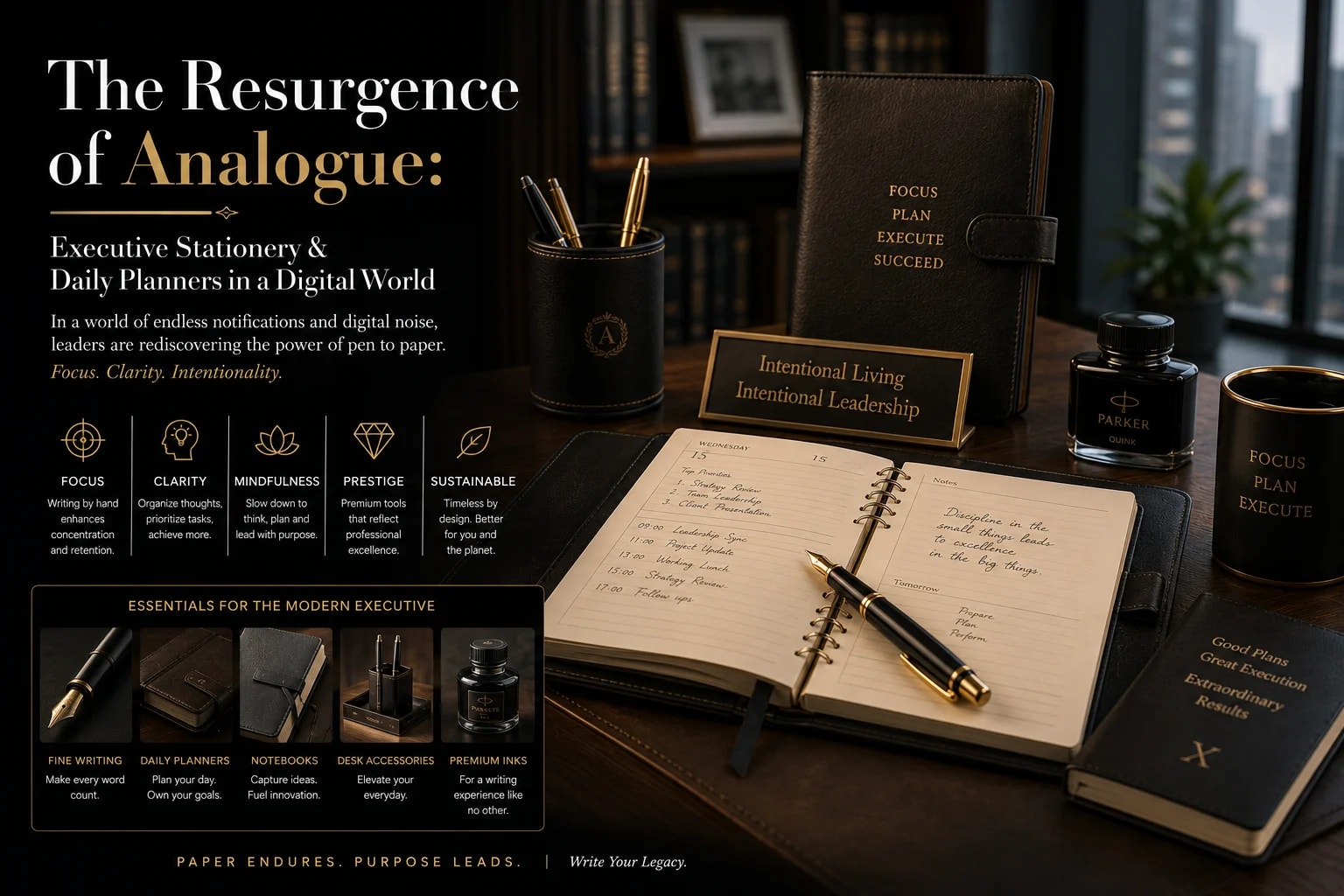
We live in a world completely dominated by screens. From smartphones to ultrawide monitors, a modern professional's day is filled with glowing pixels and endless notifications. However, at the highest levels of corporate leadership, a fascinating new trend has emerged: a massive return to pen and paper.
Walk into any Fortune 500 boardroom today, and right next to the latest tablets and laptops, you will see premium, leather-bound executive stationery and beautifully crafted daily planners.
Why are top-tier professionals spending hundreds of dollars on paper and ink when they have the best digital tools in the world? Let’s explore the psychology behind luxury stationery and why it has become such a massive opportunity in the corporate gifting market.
1. The Psychology of Pen and Paper
For a CEO managing a global team or a founder scaling a tech startup, cognitive overload is a real problem. Digital tools are fantastic for storage and team collaboration, but they are terrible for deep, uninterrupted thinking.
-
The Distraction-Free Zone: When you open a laptop to write down a strategy, you are instantly hit with emails, Slack messages, and calendar alerts. A premium daily planner provides a physical space for deep work without a single digital distraction.
-
Better Memory Retention: Neuroscience shows that physically writing by hand drastically improves memory and conceptual understanding. When a leader writes down a major revenue target in their planner, it creates a mental commitment that typing simply cannot match.
2. What Makes Stationery "Executive Level"?
True executive stationery is a masterclass in craftsmanship. You cannot sell a basic spiral notebook to a high-net-worth wealth manager. To command premium pricing, the product must meet exact luxury specifications.
-
Heavyweight Paper (100-120 GSM): Standard printer paper is too thin. Luxury notebooks use thick paper with specialized coatings. This ensures zero ink bleed-through and provides a buttery-smooth writing experience, even with heavy fountain pens.
-
Full-Grain Leather Covers: Cheap faux leather peels and cracks. Full-grain leather is the gold standard because it develops a beautiful, unique patina over time, making the notebook highly personal.
-
Lay-Flat Binding: A premium notebook uses a specific stitching method (like Smyth-sewn binding) so it lays completely flat on a desk. This is crucial for executives who need both hands free during intense seminars.
3. The Executive Planner Ecosystem
Not all planners serve the same purpose. The executive market is segmented based on how different leaders prefer to organize their time.
| Planner Style | How It Works | Ideal For |
| The Time-Blocker | Breaks the day into 15 or 30-minute intervals for strict calendar management. | CEOs, Operations Directors, and Lawyers managing billable hours. |
| The OKR Planner | Focuses on high-level quarterly milestones rather than daily tasks. | Startup Founders and Tech Executives. |
| The Dot-Grid Canvas | Offers maximum flexibility for mind-mapping and free-form note-taking. | Creative Directors, UI/UX Designers, and Marketers. |
| The Hybrid Folio | A leather zip-folio that holds an iPad on one side and a notepad on the other. | Real Estate Brokers and traveling Sales Executives. |
4. Dominating the Corporate Gifting Market
If you are building an e-commerce brand, selling single notebooks to consumers is just the beginning. The real wealth in this niche lies in B2B (Business-to-Business) sales and corporate gifting.
When a wealth management firm closes a massive deal, they don't send their client a cheap plastic pen. They send a bespoke, monogrammed leather planner. Selling directly to these firms allows you to process orders of 50 to 500 units at a time. Furthermore, high-end tech companies often include luxury, company-branded planners in their employee onboarding kits to set a tone of professionalism from day one.
5. E-Commerce Strategy for Luxury Goods
Entering the premium stationery market requires a flawless online presentation. Your digital storefront must feel just as luxurious as the physical products you are selling.
-
Lightning-Fast Architecture: High-net-worth individuals have zero tolerance for slow websites. Utilizing a fast, modern e-commerce framework ensures instant load times and seamless checkouts, which builds immediate trust.
-
Sell the Story: Luxury is a narrative. Your ads should feature high-quality macro photography showing the texture of the paper and the leather stitching. Don't just sell a notebook—sell "the foundation for your next million-dollar idea."
6. The Future: Smart Notebooks
The future of executive stationery isn't about rejecting technology; it is about seamless integration. We are already seeing the rise of "Smart Notebooks."
Executives can write on physical paper using specialized pens, and then scan the page with their smartphone. Advanced technology instantly converts their handwriting into digital text and syncs it to their favorite productivity apps. This hybrid approach offers the distraction-free focus of analogue writing with the cloud-backup security of the digital era.
Ultimately, in a business world where everyone uses the exact same software and smartphones, true differentiation comes from the physical tools a leader chooses to use. A premium daily planner is a symbol of focus, quiet luxury, and a serious commitment to success.